
The Dr. Rick Ferguson Method: How Mini Plates Revolutionized Dental & Precision Printing

Updated: Dec 10, 2025
Resin 3D printing has transformed industries ranging from prototyping to jewelry and dental labs. But anyone who’s spent hours waiting for prints to finish knows the frustration: long print times, wasted resin, and sometimes unpredictable results. Enter Dr. Rick Ferguson’s Mini Plate method, a game-changing approach that has dramatically sped up resin printing, especially for precision-focused applications like dental and jewelry work.
Who is Dr. Rick Ferguson?
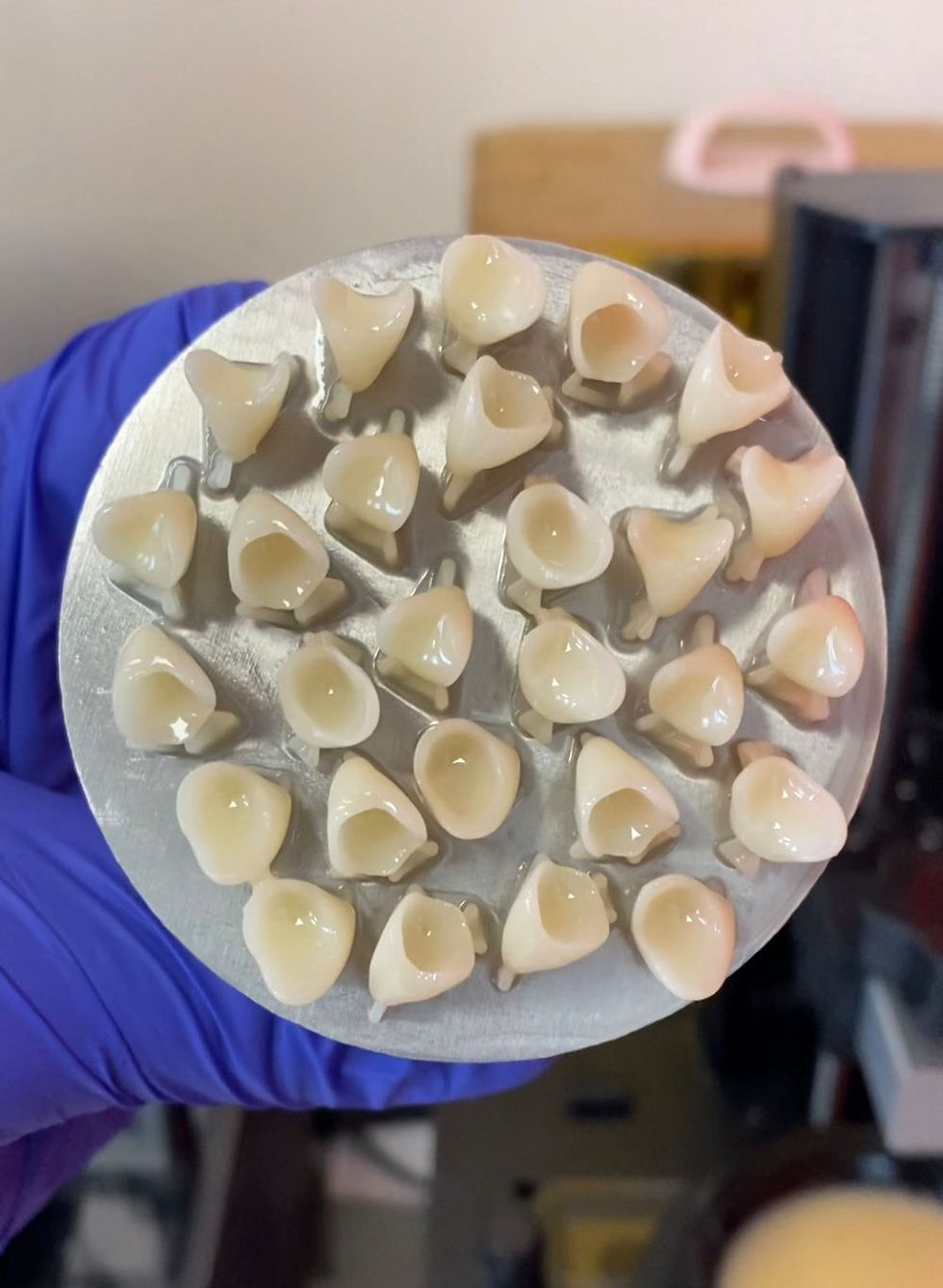
Dr. Rick Ferguson is a well-known figure in the dental and 3D printing community. He recognized early on that traditional resin printing methods were often inefficient for small, high-precision models like crowns, bridges, and dental molds. His solution? Mini plates—small, precision-engineered build plates that reduce lift distances and accelerate printing without sacrificing quality.
What Makes Mini Plates Different?
Unlike standard build plates, mini plates are compact, lightweight, and designed to minimize the mechanical stress during each layer’s peel process. Here’s why that matters:
Shorter Lift Distances: Less vertical movement per layer reduces the time it takes to print each layer. For dental models, this can cut print times by 30–50%.
Reduced Suction Force: Smaller plates mean less resin surface area is stuck to the vat film, which reduces the stress on your printer and decreases the risk of failed prints. That means we can increase the lifting speed and tract speed.
Why Dental Labs Love It
Dental professionals need speed and accuracy. Waiting hours for a single dental model can delay treatments and increase costs. With mini plates:
Labs can print multiple models in one batch without increasing print time.
The reduction in failed prints lowers resin waste and operational costs.
The method integrates seamlessly with standard LCD (or MSLA) printers.
Beyond Dental: Other Uses of Mini Plates
While Dr. Ferguson designed this method with dental labs in mind, mini plates aren’t limited to dentistry. Jewelry designers, miniaturists, and hobbyists also benefit from:
Faster prints for intricate, small-scale models
Improved layer consistency for detailed figurines
Reduced resin waste thanks to smaller vats

Getting Started with the Ferguson Mini Plate Method
Implementing mini plates in your printing workflow is easier than you think. Most modern resin printers support removable build plates, and mini vats are now widely available. A few tips:
Use a mini vat: Smaller resin volume reduces curing time per layer.
Adjust exposure settings: Shorter Z-lift distances may require slightly modified exposure times for optimal layer adhesion.
Maximize the speed: Increase the lifting and retract speed up to 400-600mm/s. Possible! Yes, you can (with the mini plate).
Final Thoughts
Dr. Rick Ferguson’s mini plate approach has proven to be a revolutionary solution for fast, precise resin 3D printing. Whether you’re running a professional dental lab, crafting jewelry, or printing miniatures as a hobby, adopting mini plates can save time, reduce resin waste, and improve the overall quality of your prints.
At Mini4Speed, we embrace these innovations, offering precision mini plates and mini vats inspired by Dr. Ferguson to help you print faster and smarter.


I commend you on crediting Dr. Rick Ferguson on his Mini Plate concept. He also developed a vat warmer for the Sonic Mini 8k to lower the viscosity of resins and has published profiles for dozens of resins optimized for the mini plate and heater.